
Last updated November 23, 2026
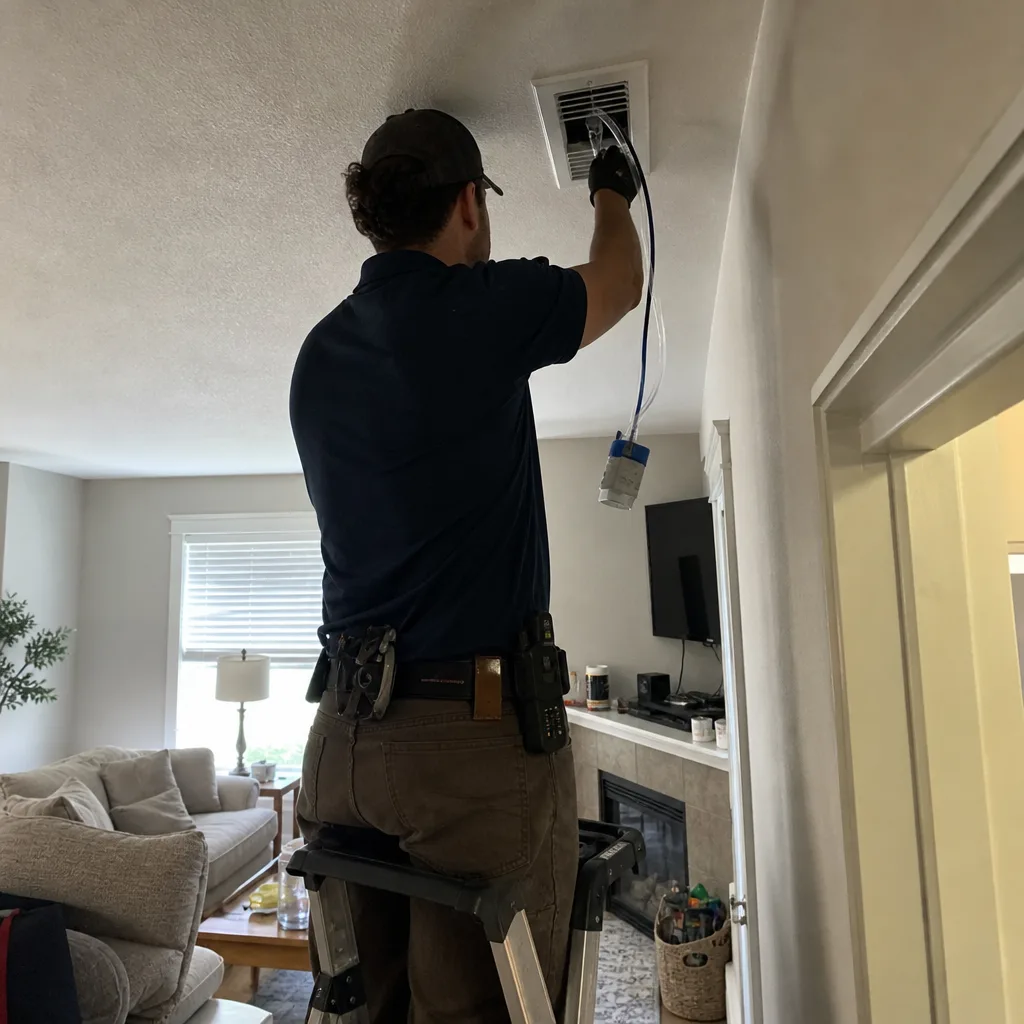
 Whole-home duct cleaning
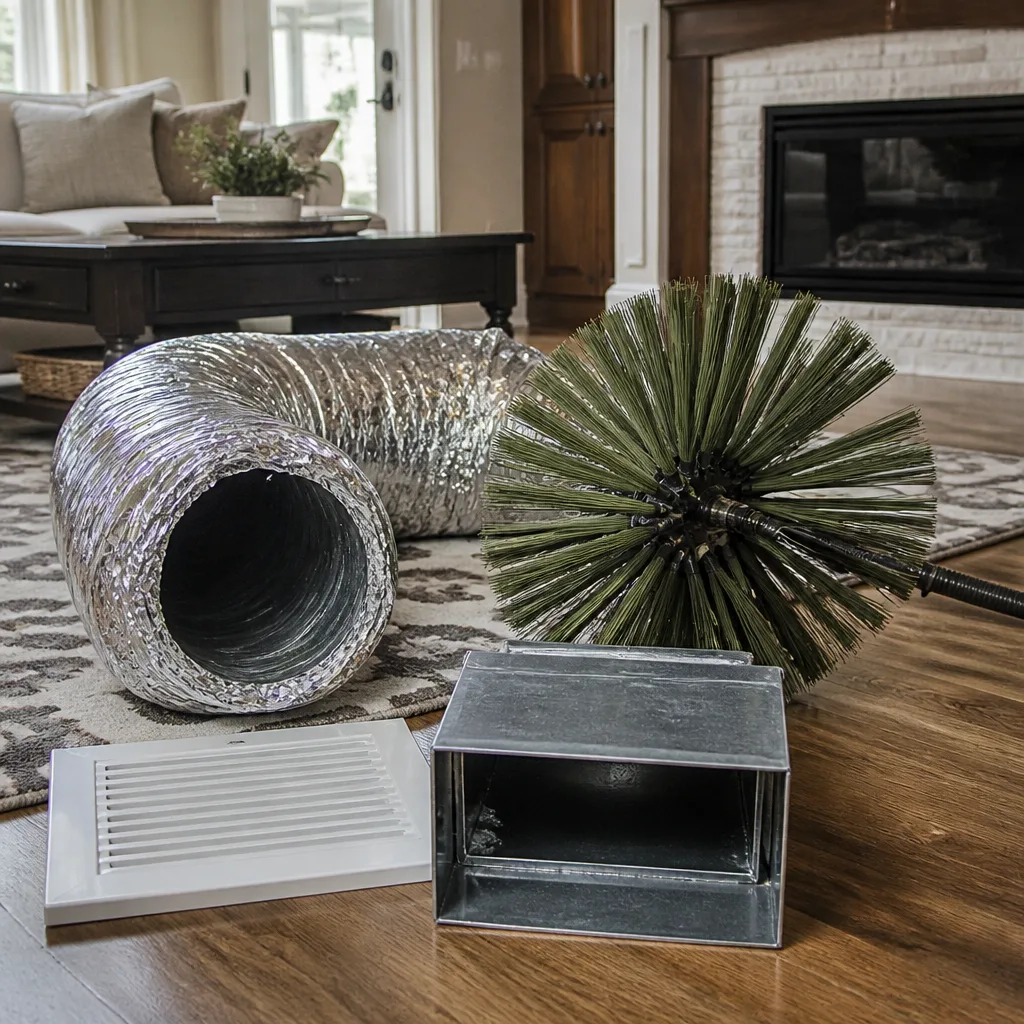
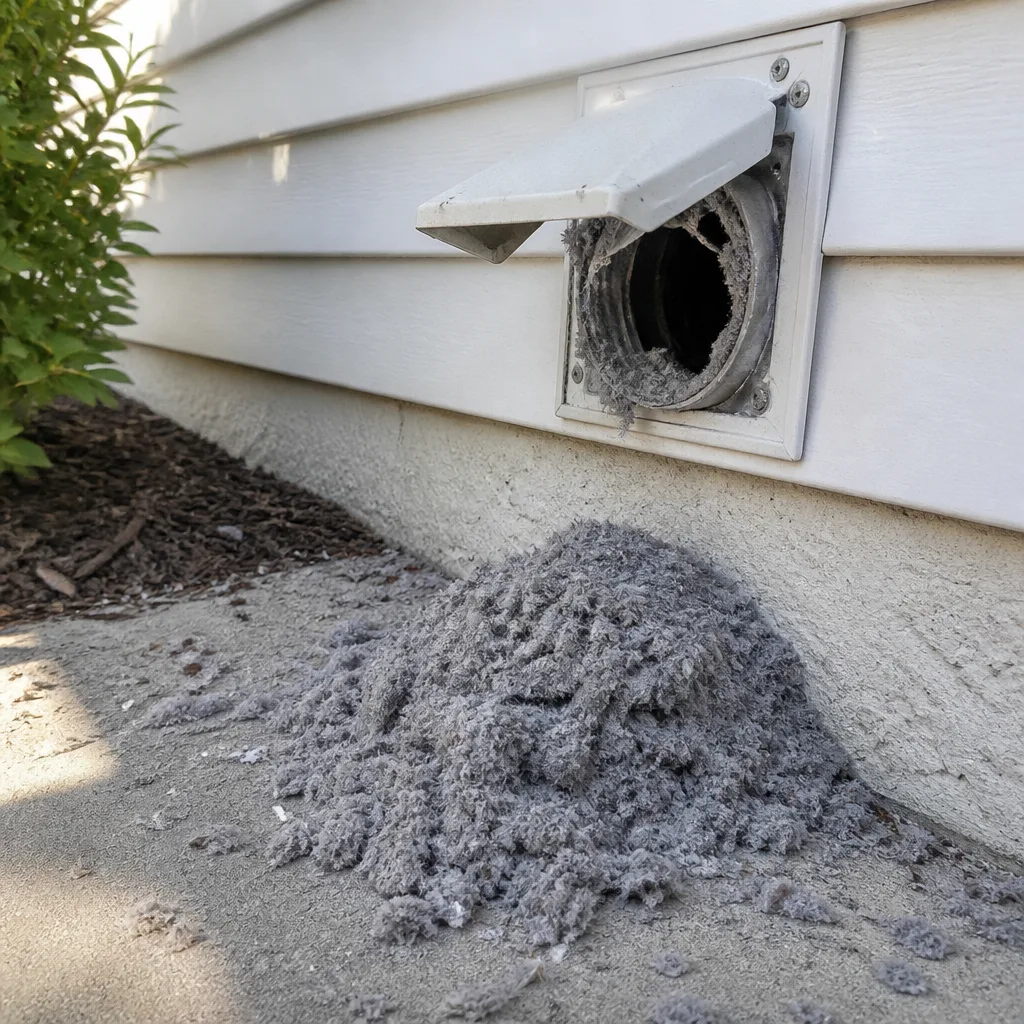 Dryer vent cleaning
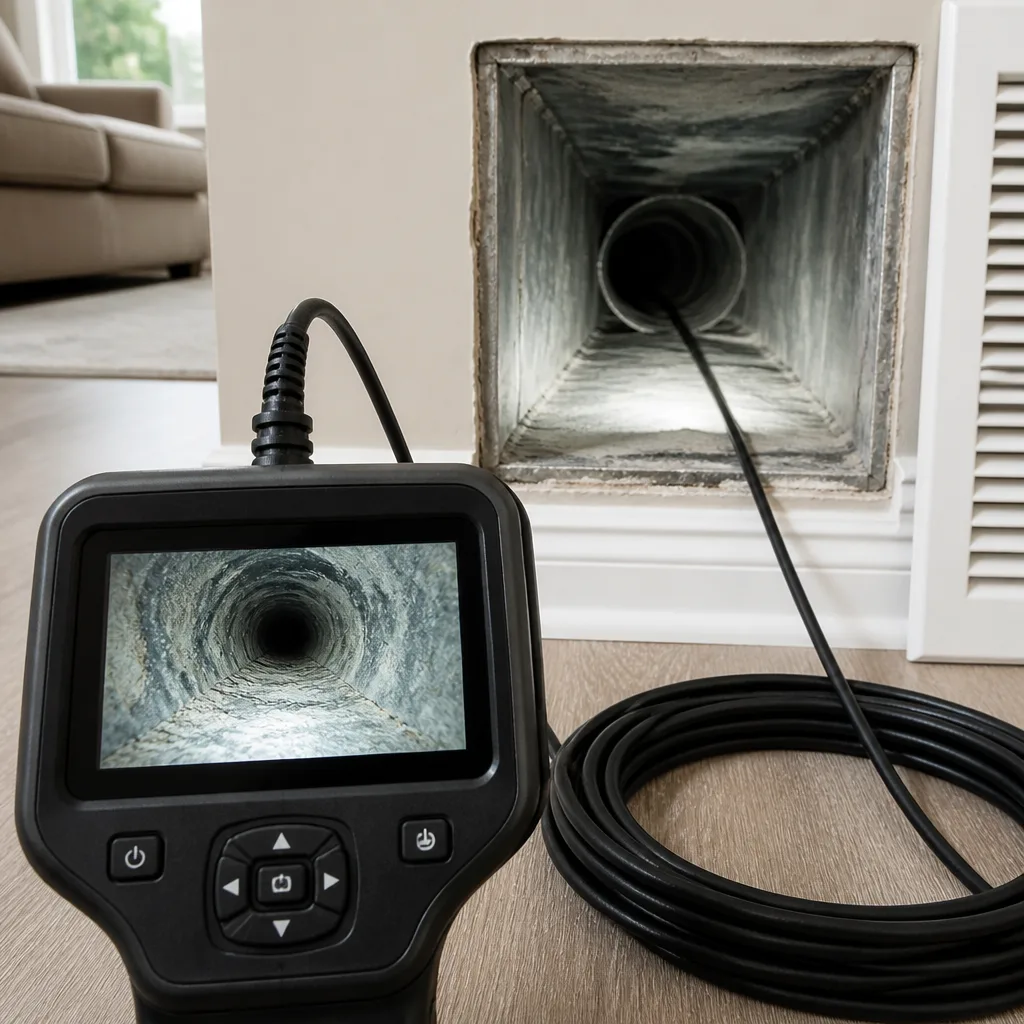 Camera inspection
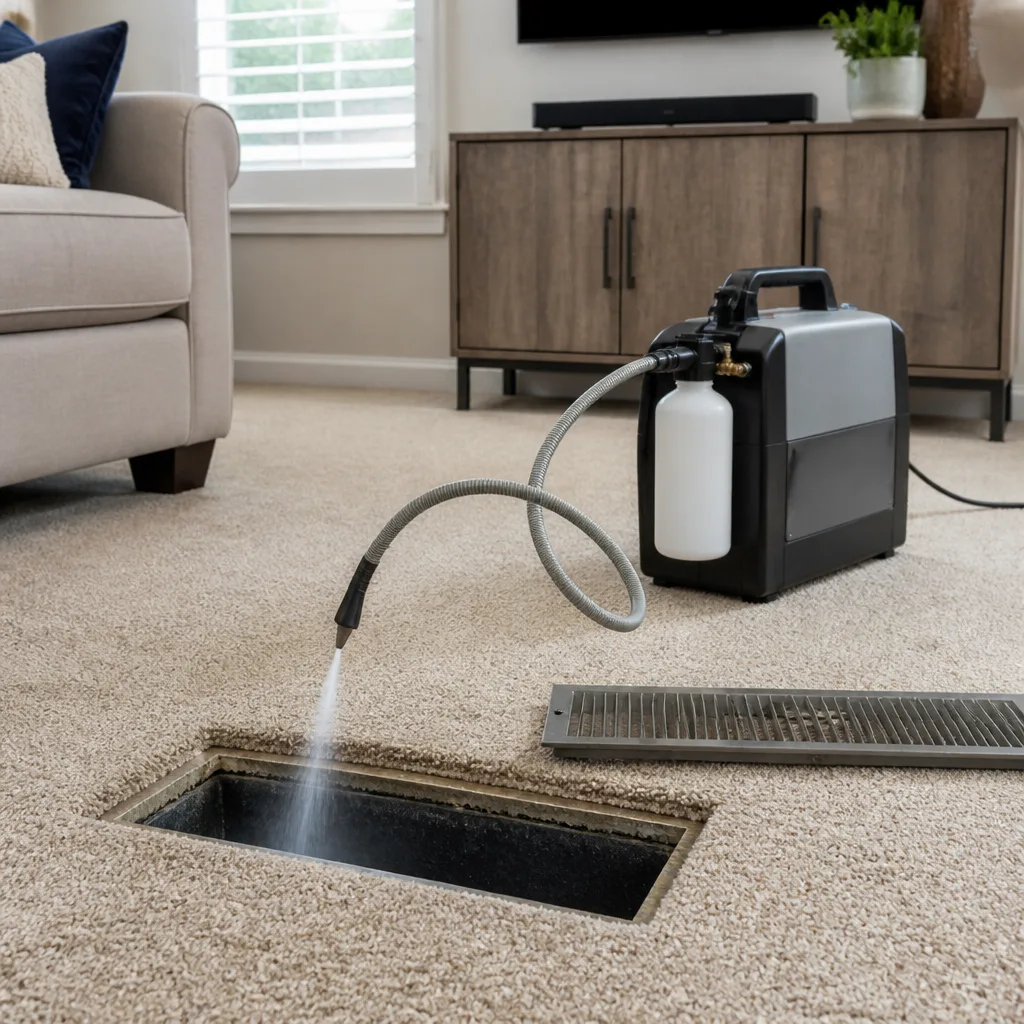 Sanitizing & deodorizing
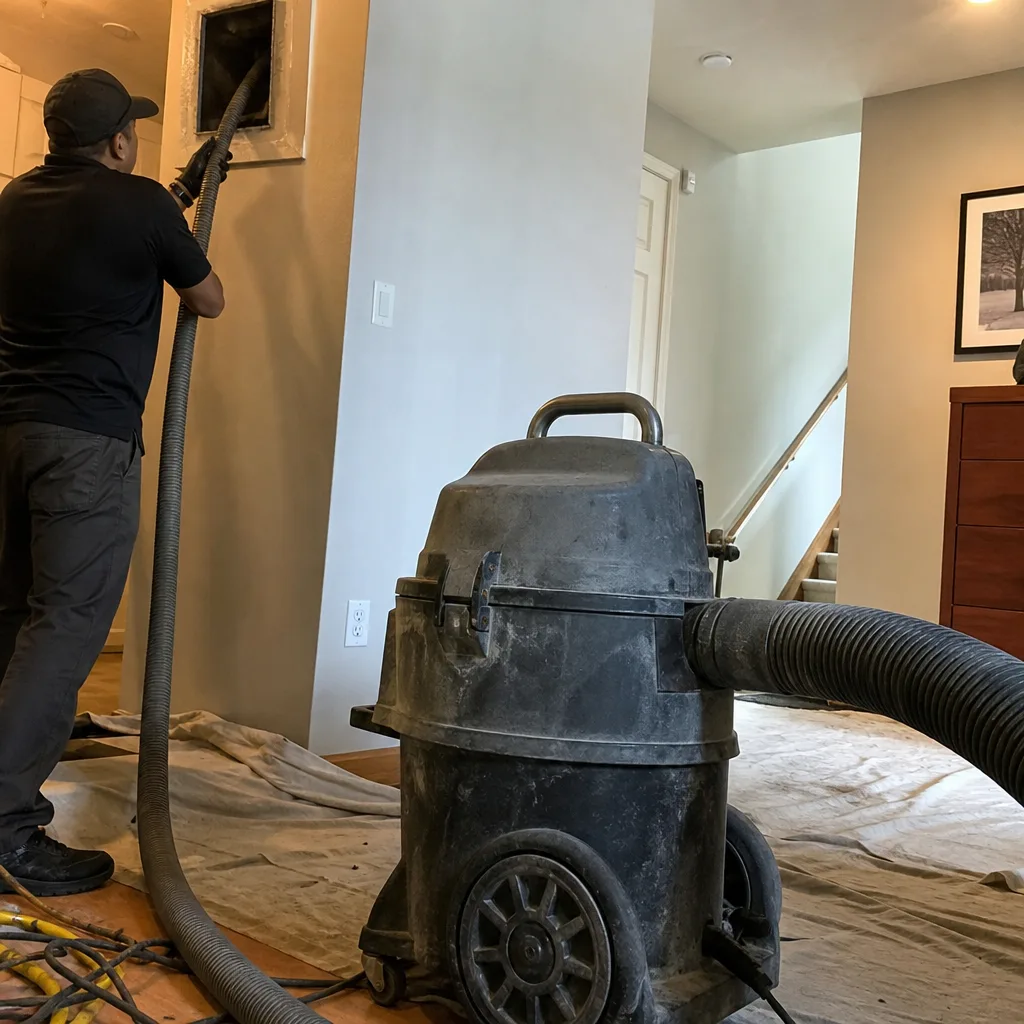
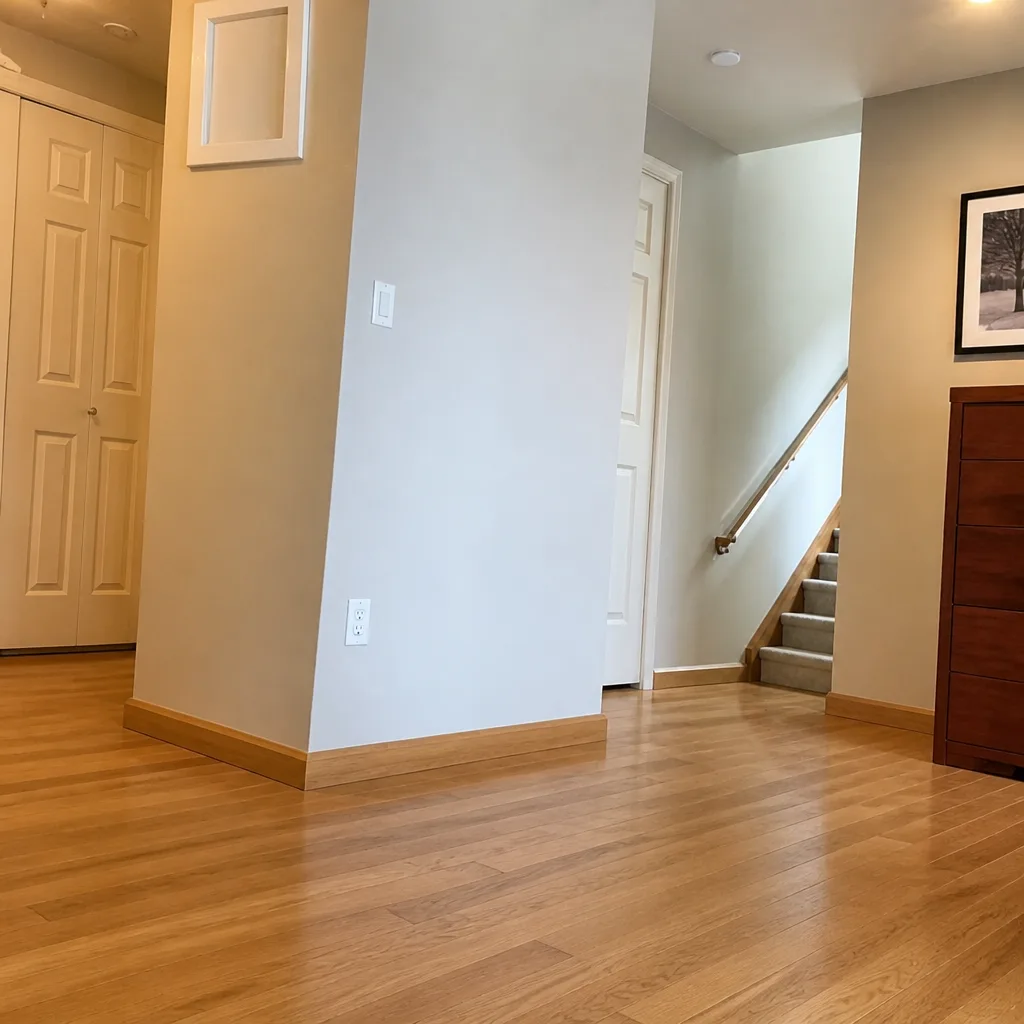
Whole-system duct and dryer vent check with before-and-after photos - you see exactly what came out of your vents
That "$99 whole-house special" is a bait ad - the real number appears once they are in your hallway, or the "clean" is a shop-vac at the register. We photograph the inside of your ducts before and after instead.
The Complete Guide to Air Duct Cleaning in Bellevue
Most air duct cleaning guides are written for a house that doesn’t exist in Bellevue. They describe rigid sheet-metal ductwork, bone-dry air, and dust as the enemy. Bellevue’s housing boom of the 1990s and 2000s left thousands of homes with flex-duct systems that trap debris differently than steel runs, and our Pacific Northwest humidity changes what grows inside a duct far more than dust alone. That mismatch is why so many Bellevue homeowners pay for a cleaning and still smell something in the hallway a month later. This guide covers the duct types actually found here, why moisture matters more than most guides admit, and how to verify a job was done right.
Styles & brands we work with
- Whole-home duct cleaning
- Dryer vent cleaning
- Camera inspection
- Sanitizing & deodorizing
Quick Answer
Air duct cleaning in Bellevue means using professional contact-cleaning and negative-pressure HEPA equipment to remove debris from the full HVAC air pathway, not just the visible vents, then inspecting boots, plenums, and coil compartments before calling the job finished. Most Bellevue homes fall into two duct profiles: flex duct in newer construction and galvanized steel in mid-century homes near Eastgate and Somerset, and each needs a different cleaning method. The job is only complete when you’ve received a post-cleaning report you can actually read.
Table of Contents
- What Duct Types Do Bellevue Homes Actually Have?
- Why Does Pacific Northwest Humidity Drive Duct Contamination?
- What Is the Full HVAC Air Pathway, and Why Does It Matter?
- What Do NADCA ACR Standards Actually Require?
- How Does a Professional Duct Cleaning Work, Step by Step?
- How Do You Read a Post-Cleaning Report?
- How Often Do Bellevue Ducts Really Need Cleaning?
- Common Mistakes to Avoid
- When to Call a Professional
- Frequently Asked Questions
What Duct Types Do Bellevue Homes Actually Have?
Bellevue has two dominant duct profiles, and they don’t respond to the same cleaning approach. Knowing which one you have tells you more about your cleaning needs than any square footage figure.
Flex duct in newer construction
The building boom of the 1990s and 2000s added thousands of homes across Bellevue, and nearly all of them use flexible ductwork. Flex duct is a plastic-lined inner core wrapped in insulation and an outer jacket. It’s cheap, fast to install, and routes easily through tight framing. It also has a corrugated inner surface that catches dust on every ridge, and it sags where installers cut corners, creating low spots where debris collects and moisture lingers. Flex runs in a Bellevue home need a contact-cleaning tool that follows the corrugation rather than a stiff brush that tears the liner, which is one reason we run Rotobrush systems built for exactly this duct type.
Galvanized steel in mid-century homes
Older neighborhoods near Eastgate and Somerset, and the mid-century stock throughout Bellevue, more often use galvanized sheet-metal trunk lines with round takeoffs. Steel is durable and cleans well with mechanical agitation, but seams and joints can open over decades. Seam gaps do two things: they leak conditioned air into crawlspaces and attics, and they let unfiltered debris back into a duct you just had cleaned. That’s the reason we treat Bellevue Air Duct Cleaning Pros work as a system inspection and not a one-pass vacuum job: a steel system with open seams needs sealing as much as it needs cleaning.
What to check on your own system
- Look at the duct material visible at a return grille: ridged plastic liner means flex, smooth grey metal means galvanized steel.
- Count the supply registers: a system with many small flex runs behaves differently from one big steel trunk.
- Note any run that sags between hangers. Sag is a debris trap regardless of material.
- Check the filter slot. A filter that’s chronically dirty points to a system pulling debris from somewhere it shouldn’t.
Why Does Pacific Northwest Humidity Drive Duct Contamination?
Dust is only half the story in Bellevue. Our climate runs humid for much of the year, and that moisture is what turns ordinary dust into something that clings, clumps, and in the wrong conditions supports biological growth inside the duct. A Bellevue home that sits at higher interior humidity through the wet months gives dust particles a way to stick to duct walls instead of passing through the filter.
What humidity does inside a duct
When warm, moist air meets a cool metal duct surface, condensation forms. In galvanized steel runs, that thin film of moisture is enough to hold dust in place and give it a foothold. In flex duct, the corrugation and any sagging low spot hold that moisture longer. Add a whole-house humidifier set too high, a bathroom fan venting into an attic instead of outside, or a crawlspace with a moisture problem, and the duct becomes a damp environment rather than a dry pipe.
Signs your Bellevue duct problem is moisture-driven
- A musty or earthy smell that returns shortly after a cleaning.
- Visible dark staining at supply registers or around the air handler.
- Condensation on duct surfaces in a crawlspace or attic run.
- Allergy-type symptoms that get worse when the system first kicks on.
That last point matters for a lot of Bellevue households. When the cause is moisture and biological growth rather than simple dust, a routine vacuum doesn’t solve it. This is the scenario where sanitizing and contamination-focused products earn their place, and it’s why we stock Abatement Technologies products for jobs that go beyond routine dust removal. Air quality and sanitizing is a separate service from basic cleaning for exactly this reason.
What Is the Full HVAC Air Pathway, and Why Does It Matter?
The full HVAC air pathway is every surface the air touches between the return grille and the supply register: return ducts, the filter slot, the air handler cabinet, the evaporator coil, the supply plenum, the trunk lines, the branch runs, and the boots at each register. Cleaning only the visible runs leaves the parts that matter most untouched. This is the single most common gap in a cheap duct cleaning.
The parts a complete job covers
- Return ducts – the dirtiest section of most systems, because they carry unfiltered household air.
- Filter slot and cabinet – where bypass and gaps let debris straight into the coil.
- Evaporator coil compartment – a wet coil with dust on it becomes a growth surface.
- Supply plenum and trunk lines – the main distribution runs.
- Branch runs and boots – the last few feet before the register, where debris settles.
Why the boots and plenum get skipped
A cleaning that focuses on what’s visible through the vent grille is a cleaning of maybe a third of the system. Boots sit at the end of each run and collect a concentrated layer of debris that a vacuum alone won’t lift. The plenum at the air handler is the single highest-volume junction in the system, and it’s the section most likely to be left alone when a crew is rushing. A complete job includes all of it. If a company can’t tell you what they do with your boots and plenum, you’ve learned what their cleaning actually includes.
Why the ecosystem view changes how you buy
Once you see the pathway as one connected system, the service lineup makes sense. Cleaning the ducts without sealing leaking seams means the cleaned ducts pull debris back in. Sealing without cleaning traps what’s already there. Cleaning without considering the coil and filter means the debris source is still active. That’s the reasoning behind our HVAC cleaning service going beyond the duct runs to the equipment itself.
What Do NADCA ACR Standards Actually Require?
NADCA’s ACR standard (Assessment, Cleaning, and Restoration) is the industry benchmark for what a duct cleaning is supposed to include. It sets out a sequence: assess the system before cleaning, use source-removal methods under negative pressure, protect the occupied space, and verify the results afterward. Most discount companies skip the assessment and the verification, which are the two steps that actually prove the work.
What the standard expects, in plain terms
- Assess first. Inspect the system and document conditions before any cleaning tool goes in.
- Control the work area. Use negative pressure so loosened debris goes into a HEPA-filtered vacuum, not into the living room.
- Use source removal. Contact-clean the duct surfaces with mechanical agitation and HEPA vacuum simultaneously, not just pull a vac across the opening.
- Clean the whole pathway. Include the components beyond the ducts: the plenum, coil area, and boots.
- Verify and report. Compare before-and-after conditions and provide a written summary.
What discount companies typically deliver instead
A discount company often runs a single portable vacuum from one register while a cheap brush spins through a run or two, then leaves. There’s no assessment, no negative-pressure control, and no report. The visible vent looks cleaner. The coil, plenum, and boots are untouched. If the technician never opens the air handler cabinet or inspects the boots, the job barely got started. That’s why we use Nikro negative-pressure HEPA equipment and Rotobrush contact-cleaning systems: they make the standard’s requirements physically achievable, not just aspirational.
How Does a Professional Duct Cleaning Work, Step by Step?
A proper air duct cleaning in Bellevue follows a defined sequence. This is what a complete job looks like, and what you should be able to observe when it’s done in your home.
- System inspection. Open the air handler cabinet, check the filter and slot, inspect the coil compartment, and look at the duct material and condition.
- Protect the space. Set up containment and negative pressure so debris stays in the vacuum rather than settling onto surfaces.
- Clean the supply and return runs. Run a contact-cleaning tool through each run while HEPA vacuum pulls the loosened material into a sealed chamber.
- Clean the plenum and air handler. Address the high-volume junction and the coil compartment, which is where a lot of contamination concentrates.
- Clean the boots and registers. Pull the register grilles, clean the boots, and reinstall.
- Seal leaks where found. Close open seams and disconnected joints so the cleaned system holds its condition.
- Sanitize when warranted. Apply appropriate treatment where inspection revealed moisture or growth.
- Document and report. Provide before-and-after photos and a written summary of what was cleaned and what condition the system is in.
The step most people leave out is the sealing step. On a flex-duct system, the outer jacket can be torn or disconnected at a boot, letting unfiltered attic or crawlspace air into the run. On a steel system, seams open. Either way, cleaning the duct and then leaving it open means it re-contaminates faster. Duct repair and sealing is a standalone service for this exact reason, and it’s the piece that makes a cleaning last.
How Do You Read a Post-Cleaning Report?
A post-cleaning report should let you confirm what was cleaned and see the condition before and after. If you can’t tell from the report which parts of the system were addressed, ask for it in writing. A useful report covers six things.
What a real report includes
- Before-and-after photos of the same runs and components, ideally from the same angle.
- A list of the components cleaned – returns, supply runs, plenum, boots, coil area – so you can see whether the full pathway was included.
- The duct material and condition observed – flex versus steel, and any damaged sections.
- Any leaks or disconnected sections found and whether they were sealed.
- Whether sanitizing was applied and why.
- Recommendations for filters or repairs that would extend the results.
Red flags in a report
A report that’s just a receipt with a dollar figure tells you nothing. No photos, no list of components, no mention of the plenum or coil is a sign the work was done through the vents and nowhere else. The presence of Honeywell or Aprilaire product recommendations isn’t a red flag; unfamiliar recommendations for a filter upgrade or a whole-home media cabinet make sense when the previous filter was undersized for the system. Asking for a written filter recommendation with a model name is a reasonable request.
How to verify the work was actually done
- Ask to see the before-and-after photos before the technician leaves.
- Confirm the boots were pulled and cleaned, not just the grilles.
- Verify the air handler cabinet was opened and the coil inspected.
- Make sure the report names each component cleaned, not just a total.
- Note whether leaks were sealed or left open.
How Often Do Bellevue Ducts Really Need Cleaning?
There’s no fixed calendar number that applies to every Bellevue home. The honest answer is that frequency depends on the home, the system, and the occupants, and a few specific conditions justify cleaning sooner.
Conditions that justify cleaning
- Visible debris or dust blowing out of supply registers when the system runs.
- A musty smell that returns within weeks of a cleaning, especially in a humid Bellevue home.
- Recent renovation or construction that generated fine dust.
- Known or suspected water intrusion, mold, or pest activity in the ductwork.
- A household member with allergies or respiratory sensitivity that worsens when the system runs.
- Visible debris inside the return grille or on the filter slot.
How Bellevue’s seasonal pattern plays in
Bellevue’s wet months close up homes and keep windows shut while the system runs. That pattern tends to concentrate whatever is in the air pathway before the first cleaning, and the dry summer months don’t necessarily flush it out. The practical approach for a lot of Bellevue homes: inspect rather than guess, clean based on condition, and seal leaks at the same time so the result holds. If a company quotes you a strict “every X years” schedule with no inspection, that’s a sales script, not a recommendation.
What keeps ducts clean longer
- Use a correctly sized, high-quality filter and change it on a real schedule.
- Seal leaking seams and disconnected joints after cleaning.
- Address moisture sources: bath fans venting outside, proper crawlspace humidity control.
- Clean the dryer vent cleaning on its own separate schedule, since lint buildup is a different problem with a different risk.
Common Mistakes to Avoid
- Buying the cheapest coupon quote. A low teaser price usually means a vent-only pass with a portable vacuum, no negative pressure, and no report. Ask what components are cleaned before you book.
- Assuming flex duct and steel clean the same way. Flex duct needs a tool that follows the corrugation without tearing the liner. A stiff industrial brush in a corrugated run can damage the inner surface and leave you worse off.
- Skipping the plenum and coil compartment. The air handler is where debris concentrates and where moisture-driven growth tends to start. A job that stops at the vents doesn’t reach it.
- Cleaning without sealing. Open seams and disconnected boots let debris right back into a freshly cleaned system. Duct repair and sealing is the step that makes the cleaning last.
- Ignoring Pacific Northwest humidity. A recurring musty smell in a Bellevue home often points to moisture, not dust. Cleaning without addressing the moisture source is a temporary fix.
- Accepting a report with no photos. Before-and-after photos and a named list of components cleaned are the only real proof the work happened.
- Treating dryer vents as a one-time errand. Lint accumulates continuously, and a blocked dryer vent is a real safety concern. Dryer vent cleaning needs its own recurring attention, separate from duct cleaning.
When to Call a Professional
Some duct problems are clearly a pro job: visible debris at registers, a musty smell that keeps coming back, recent renovation dust in the system, moisture or pest activity in the ductwork, or a household member whose symptoms worsen when the system runs. Dryer vents are the same story: any noticeable lint buildup or longer dry times point to a blocked vent that needs professional cleaning. If you’re buying or selling and want a baseline assessment before you move in, that’s a good reason too. We answer 24/7, and you can call (855) 337-2032 to book a free estimate. Bellevue Air Duct Cleaning Pros offers serving Bellevue with a single crew handling all five services: air duct cleaning, air duct cleaning as the core service, plus dryer vent, HVAC cleaning, duct repair and sealing, and air quality and sanitizing, so there’s no handoff between companies. Fast dispatch from 7am to 7pm, Sunday through Friday.
Frequently Asked Questions
Bellevue air duct cleaning is priced per system by a written estimate, not per vent, and the final price is set before work starts. Bellevue’s mix of flex-duct and steel-duct homes means the scope varies, which is why we quote a flat price per system after inspecting yours rather than advertise a teaser figure. Call (855) 337-2032 for an exact quote; estimates are free.
Cheap quotes usually cover less work: one portable vacuum, a pass through the visible vents, no plenum or coil inspection, and no report. The low price is real, but it buys a fraction of the job. What you save on the invoice you often pay for in re-contamination within a few months. Call (855) 337-2032 for an exact quote on the full job; estimates are free.
You should receive before-and-after photos and a written list of the components cleaned, including the boots, plenum, and coil compartment. If the report can’t tell you what was cleaned, it wasn’t verified. Ask for the report before the technician leaves. Call (855) 337-2032 for an exact quote; estimates are free.
There’s no universal schedule. Bellevue homes usually warrant cleaning based on visible debris, recurring odor, renovation dust, moisture, or allergy symptoms rather than a fixed number of years. Inspect first, then decide. Call (855) 337-2032 for an assessment; estimates are free.
Yes, flex duct dominates the 1990s and 2000s construction throughout Bellevue, and it needs a contact-cleaning tool designed for corrugated liner rather than a stiff brush. Using the wrong tool can tear the inner surface. We run Rotobrush systems built for this duct type. Call (855) 337-2032 for an exact quote; estimates are free.
Often, yes. Open seams and disconnected boots in Bellevue systems let debris right back into cleaned ducts, and they waste conditioning energy. Sealing closes the leaks that cleaning alone leaves behind. If inspection finds leaks, we’ll tell you before any work starts, and the price is set in the written estimate. Call (855) 337-2032; estimates are free.
We answer 24/7. A call outside dispatch hours is booked into the next opening, Sunday through Friday, 7am to 7pm.
The Bottom Line
Bellevue duct problems aren’t generic, and the solution shouldn’t be either. Flex duct in newer construction and galvanized steel in mid-century neighborhoods need different cleaning methods. Humidity drives contamination here more than dust alone. And a complete job covers the entire HVAC air pathway, from the plenum and coil to the boots and registers, then verifies the result with a written report and before-and-after photos. Buy a flat price per system, not a per-vent teaser, and pair cleaning with sealing so the result holds. That’s the framework to use when you’re comparing quotes for air duct cleaning in Bellevue.
Call (855) 337-2032. We answer 24/7. Fast dispatch from 7am to 7pm, Sunday through Friday.
Written by the team at Bellevue Air Duct Cleaning Pros.
See the difference
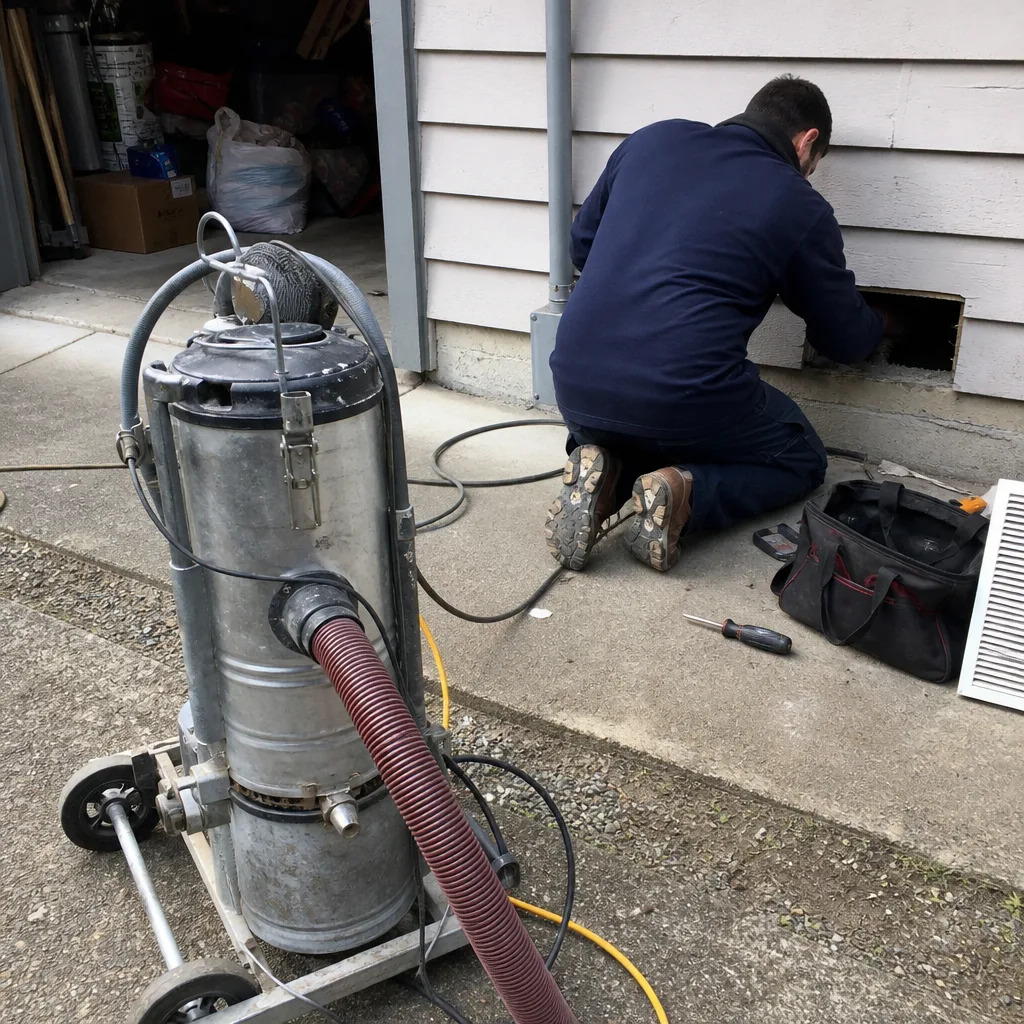 Before
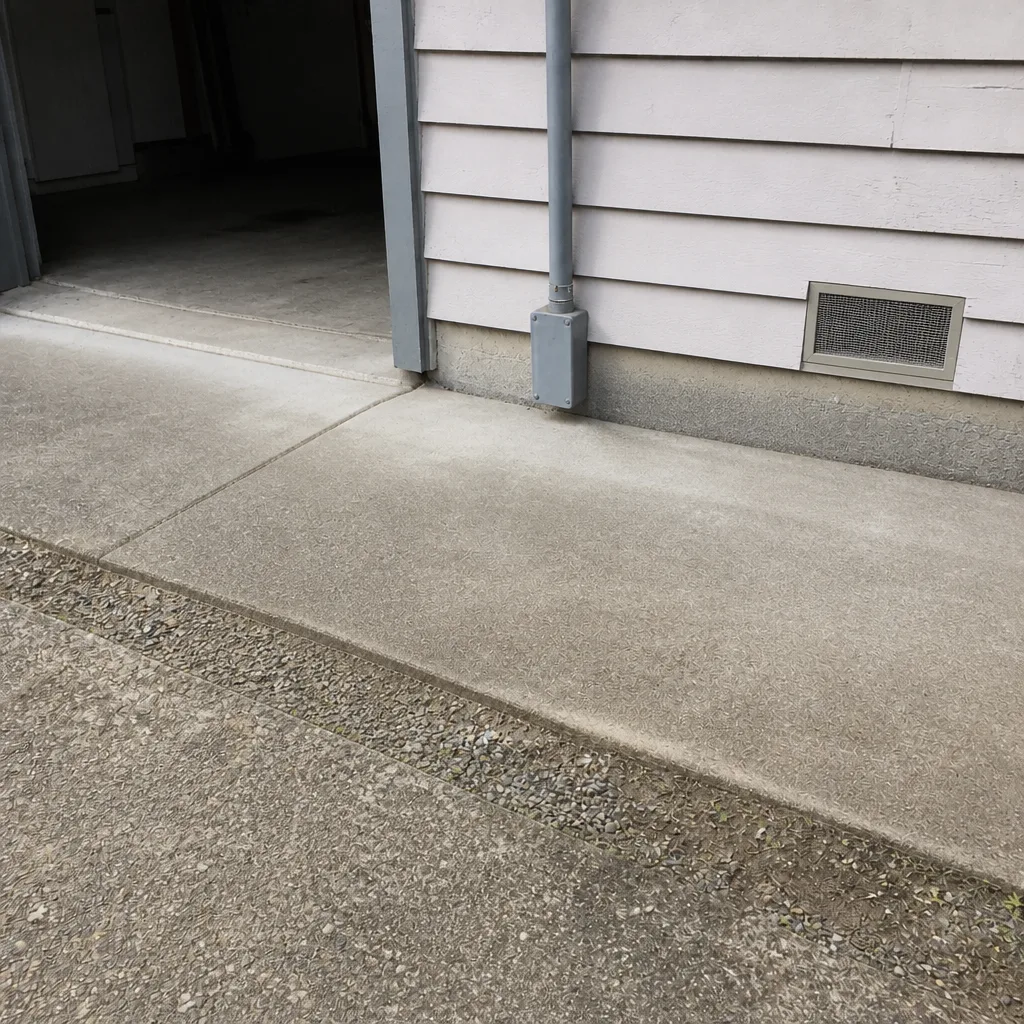 After
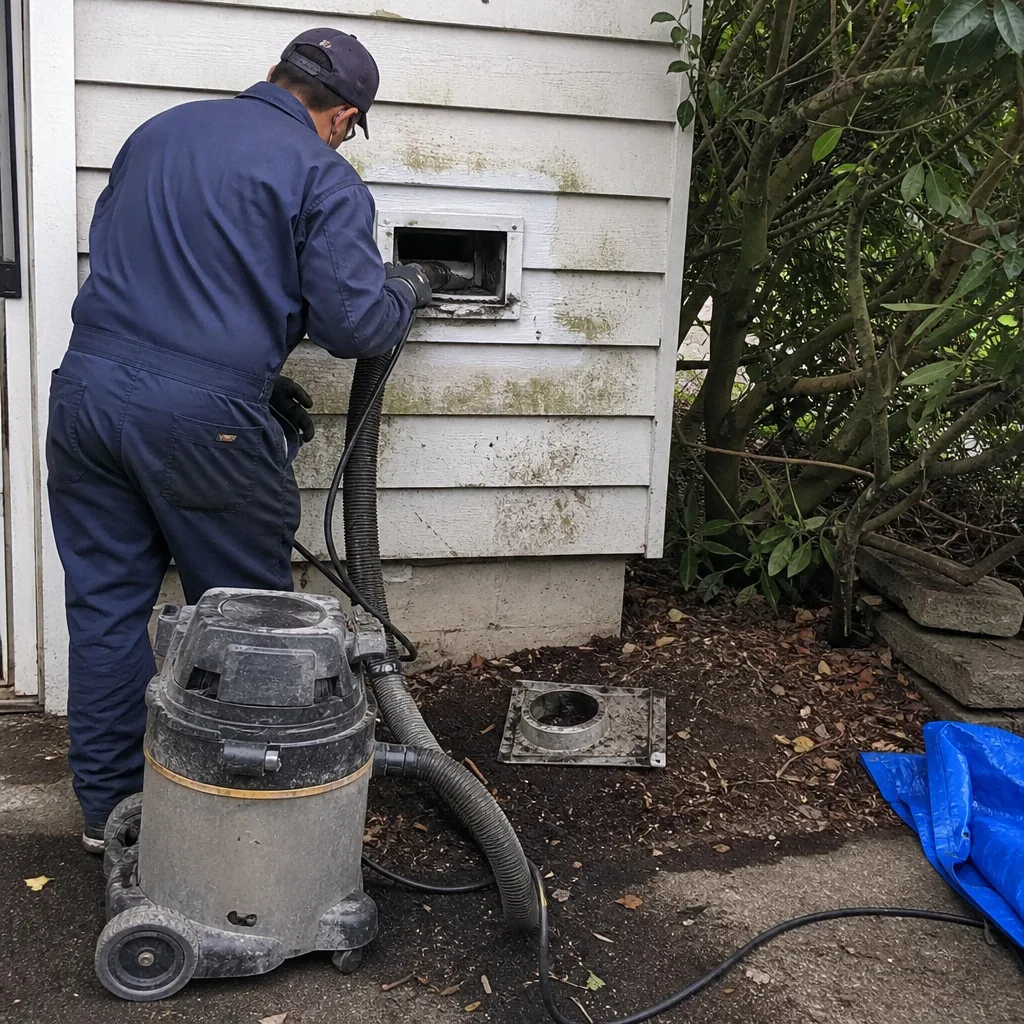 Before
 After
 Before
 After